Charter Storm by Mary Searcy Bixby
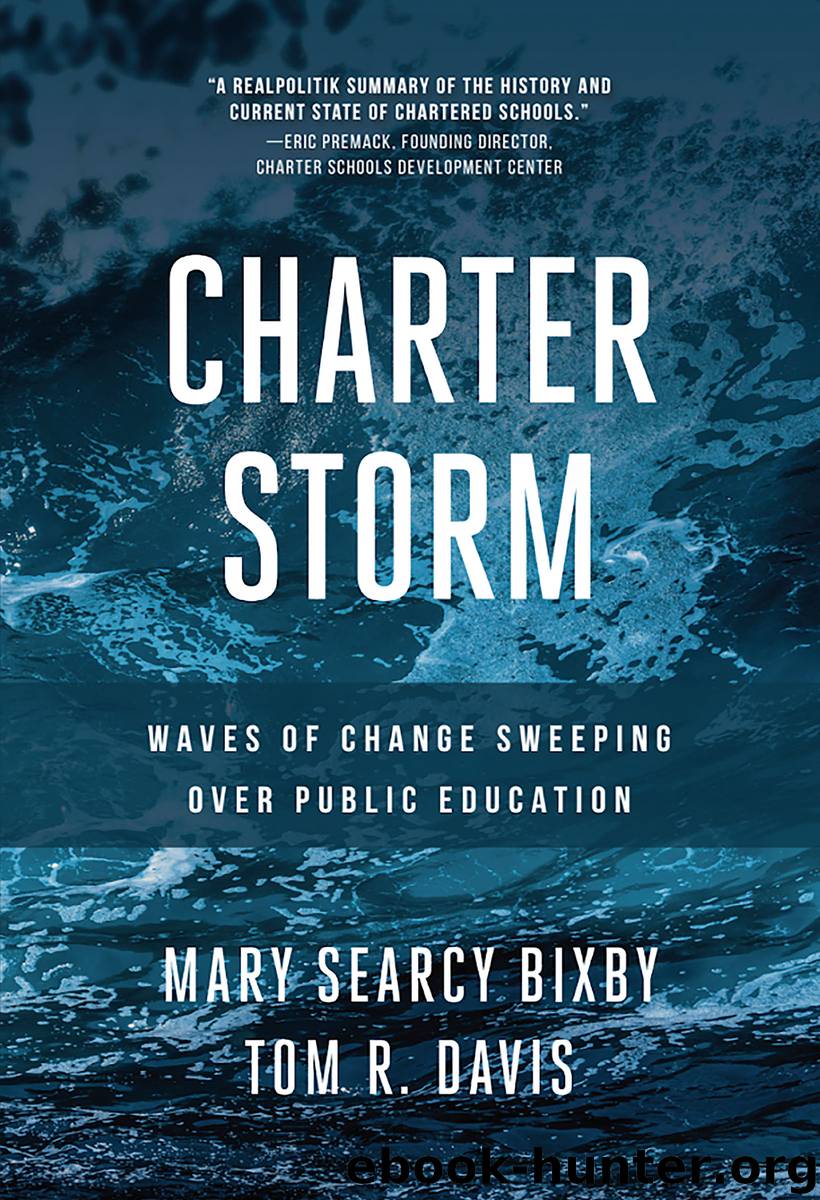
Author:Mary Searcy Bixby
Language: eng
Format: epub
Publisher: Greenleaf Book Group Press
Published: 2018-07-18T16:45:28+00:00
4. Strong Charter Law Provides Chartered Schools with Fiscal Flexibility
The Chartered School’s Perspective
The chartered school model takes a businesslike approach to budgeting. It is revenue neutral, relies on a balanced budget and good business practices, and accommodates flexibility, the uniqueness of a learning community, and long-range strategic planning.
The strategic-planning component means a budget can focus on the long term, which includes addressing entrepreneurial and creative opportunities for investment into the organization. In the case of traditional public education, its budgeting guidelines require school districts to spend the money they receive every year. The way in which they spend their money is highly regulated as well. This prevents school districts from effectively planning for the long term.
The traditional public education business process focuses on the federal, state, and local governments controlling budgeting. This top-down model is inherently paternalistic. It is as if the government oversight bodies are telling school districts, “We don’t trust you, so we’ll make rigid rules that engender sameness for all school districts.”
In the chartered school model, each organization is in control of its budgeting process. The corporate model is bottom-up. This arrangement requires legal compliance and following standard accounting practices. It entrusts each chartered school to develop a process that puts students’ needs first and allows schools to put together the best educational program possible. Funds can be spent toward growing a school and long-term plans that may require years of steady investment according to a school’s strategic plan.
Chartered school fiscal flexibility is more similar to the corporate approach to budgeting than it is to the traditional public education budgeting model. This makes sense because chartered schools are small corporations that are intended to function in a market-driven public education landscape.
While the traditional public school’s fiscal accountability model is intended to engender ethical practices and avoid malfeasance, it can also prevent schools from acting in their best interests. The chartered school model gives schools the ability to customize their budgetary process to accommodate their particular needs. Many traditional school leaders envy this inherent flexibility.
Both traditional public school and chartered school budgets must follow the budget guidelines in their respective compliance framework. Most chartered schools operate under the corporate law formula. This allows chartered schools’ budgets to follow principles driven by programs that result in positive student outcomes. Chartered schools’ budgetary guidelines allow them to take a pragmatic approach to education: When a chartered school identifies a need, it can act quickly to fill it. Rather than be restricted by one-size-fits-all line-item budget guidelines that are part of a district’s compliance framework, chartered schools are able to implement custom strategies to address their greatest challenges and develop successful programs. The fact that corporate law gives chartered schools freedom not afforded to school districts means exactly that—chartered schools are not bound to traditional public school’s line-item budgets.
Under most current charter school law, intermediaries, such as counties and chartered school commissions, receive state funds designated for chartered schools and are responsible for distributing them. When counties or chartered school commissions
Download
This site does not store any files on its server. We only index and link to content provided by other sites. Please contact the content providers to delete copyright contents if any and email us, we'll remove relevant links or contents immediately.
The Art of Coaching Workbook by Elena Aguilar(51136)
Trainspotting by Irvine Welsh(21608)
Twilight of the Idols With the Antichrist and Ecce Homo by Friedrich Nietzsche(18602)
Fangirl by Rainbow Rowell(9211)
Periodization Training for Sports by Tudor Bompa(8237)
Change Your Questions, Change Your Life by Marilee Adams(7718)
This Is How You Lose Her by Junot Diaz(6857)
Asking the Right Questions: A Guide to Critical Thinking by M. Neil Browne & Stuart M. Keeley(5741)
Grit by Angela Duckworth(5576)
Red Sparrow by Jason Matthews(5450)
Paper Towns by Green John(5163)
Room 212 by Kate Stewart(5091)
Ken Follett - World without end by Ken Follett(4705)
Housekeeping by Marilynne Robinson(4420)
The Sports Rules Book by Human Kinetics(4367)
Double Down (Diary of a Wimpy Kid Book 11) by Jeff Kinney(4252)
Papillon (English) by Henri Charrière(4238)
The Motorcycle Diaries by Ernesto Che Guevara(4069)
Exercise Technique Manual for Resistance Training by National Strength & Conditioning Association(4048)
